The Pittsburgh SCADaddle: Stories of Loss, Survival, and the Need for Research
For the past three years, I have photographed Pittsburgh’s SCADaddle for Research 5K. When I first became involved, I understood that the event was raising awareness and supporting research for spontaneous coronary artery dissection, or SCAD. What I could not fully understand at the time was how many different stories would exist within the same event. Some people arrive as survivors. Others walk beside someone who has experienced SCAD. Some families participate in memory of someone who is no longer here. And every year, while photographing the race itself, I have also had an opportunity to listen. The more stories I hear, the clearer it becomes that the effects of SCAD extend far beyond a single medical event. That became especially apparent this year while listening to Michele Hebda and Mandy Guenther share two very different experiences connected by loss, survival, family, and a desire for answers.
Remembering Heather Hebda Stark
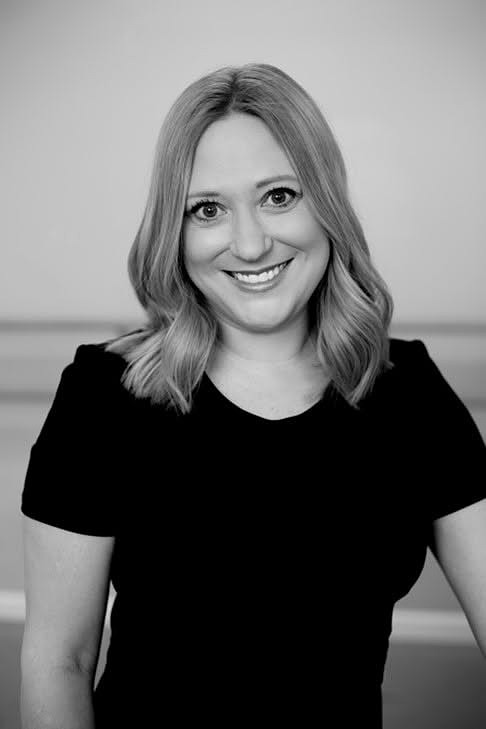
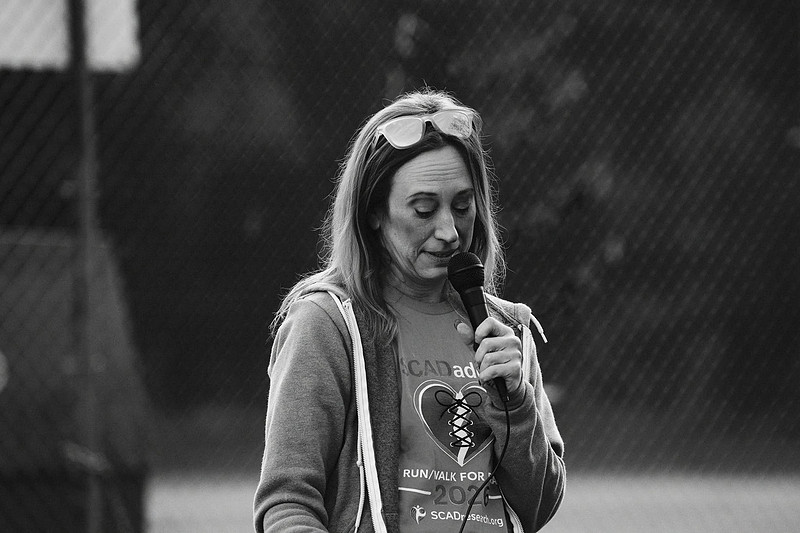
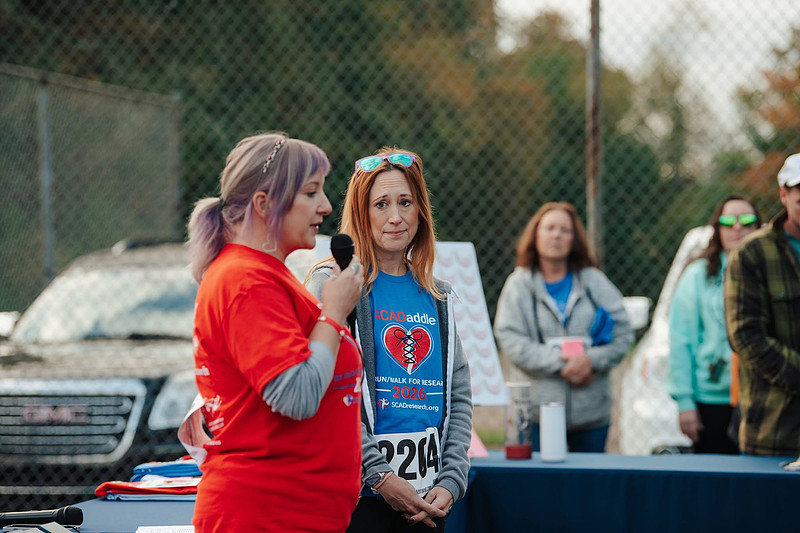
I first came to know Michele Hebda through the Pittsburgh SCADaddle and the story of her sister, Heather Hebda Stark. Heather died unexpectedly from SCAD in October 2022. She was only 39 years old. She was a wife, a sister, a friend, the founder of South Hills Dance Academy, and a mother of three children. She had recently welcomed her youngest child, a daughter. Those facts communicate something about the life that was lost. Hearing Michele talk about Heather communicates something different. Over the past three years, I have photographed Michele as she has spoken publicly about her sister and why continuing to raise awareness about SCAD matters to her. There are moments when you can see how close the loss still is. She may be standing in front of a crowd at an event she helped organize, speaking clearly about research and awareness, while simultaneously trying to hold together the emotions that come with talking about someone she loved. Photographing those moments has made me think differently about what an event like the SCADaddle represents.
Grief Does Not Follow an Event Schedule
People arrive. There are announcements. Participants gather. The race or walk begins. People cross the finish line. Eventually, everyone goes home. Grief does not operate that way. A person can continue working, raising a family, organizing events, laughing with friends, and moving through everyday life while still carrying an absence that never completely leaves. Watching Michele return each year has made that especially apparent to me. Organizing an event in Heather's memory means repeatedly talking about what happened. It means saying her name. It means explaining SCAD to people who may have never heard of it. It means returning to an experience that changed their family permanently. There has to be an emotional cost to doing that. But there is also a purpose. Through the Pittsburgh SCADaddle, Heather continues to be spoken about and remembered while the event creates opportunities for other families and survivors to find people who understand what SCAD has brought into their lives.
Mandy's Story Shows a Different Side of SCAD
This year's event also introduced me to the story of Mandy Guenther. Mandy is a three-time SCAD heart attack survivor. She shared that on July 16, 2026, she experienced her second SCAD-related heart attack. She was released from the hospital that Sunday. Then, on July 21, she experienced a third heart attack and was hospitalized again. One of the details that stayed with me was what Mandy said about the week before all of this happened. She had received what she described as a clean bill of health. From her perspective, things appeared to be going well. Within days, that changed dramatically. That uncertainty is part of what makes her experience so difficult to hear.
For Mandy, the Questions Extend Beyond Her Own Health
Her sister died in 2019. Now Mandy has survived three heart attacks herself. When she speaks about wanting additional research, she is not simply trying to understand her own experience. She thinks about her daughters. She thinks about her nieces. She thinks about what answers today could potentially mean for members of her family in the future. That gives advocacy a different weight. Research becomes personal very quickly when the questions involve the people you love.
Two Women, Different Experiences, Similar Reasons for Speaking
Michele and Mandy came to this event from different circumstances. Michele lost her sister. Mandy has experienced the loss of her own sister while also becoming a three-time survivor herself. One is carrying the perspective of a family member whose loved one did not survive. The other knows what it is like to experience SCAD personally while also understanding what it means for a family to experience loss. Yet listening to both of them, I kept noticing a common thread. Neither one can change what happened. What they can do is talk about it. They can advocate. They can participate in research efforts. They can help someone who has never heard of SCAD understand that it exists. And they can remind other survivors and families that there are people who understand some portion of what they are experiencing.
SCAD Affects the People Standing Around the Survivor Too
At the Pittsburgh SCADaddle, you see spouses. Children. Parents. Brothers and sisters. Friends. People who were in waiting rooms. People who received frightening phone calls. People who helped someone through recovery. And people who are participating because the person they would have wanted standing beside them is no longer here. Their experiences are different from those of survivors, but they are still part of the story. That becomes visible at an event like this.
What I Notice as the Photographer
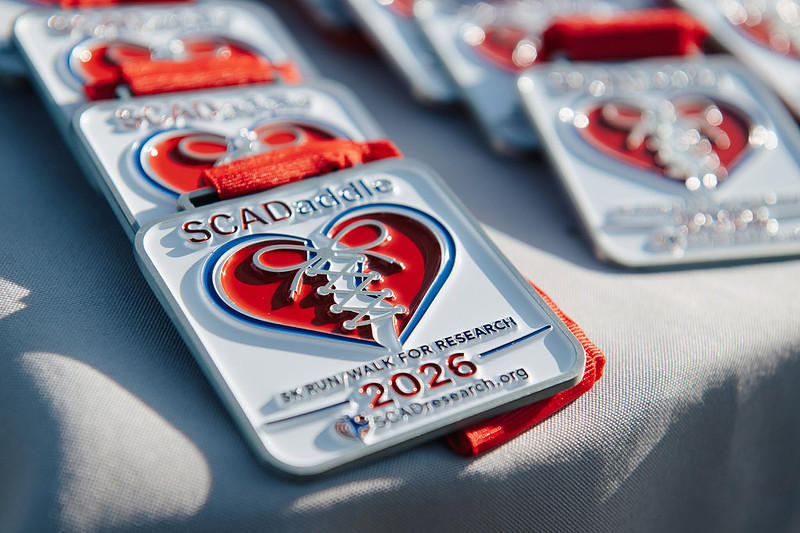
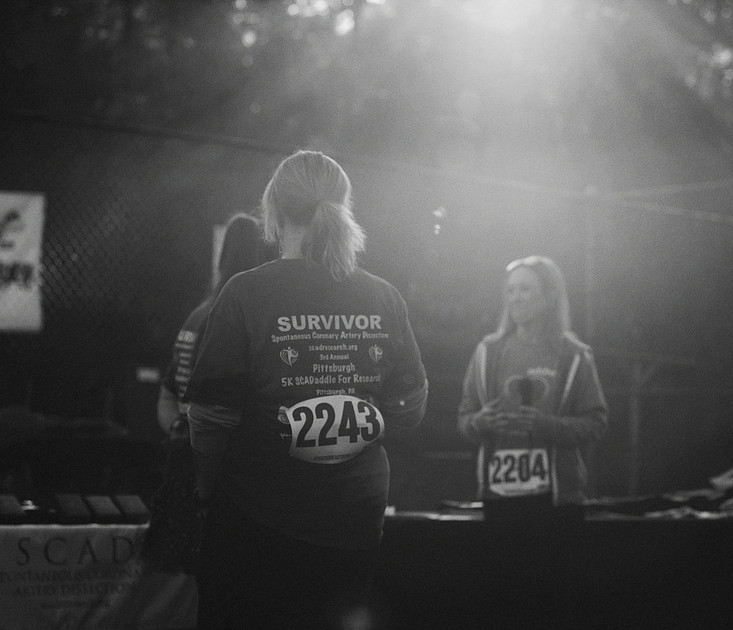
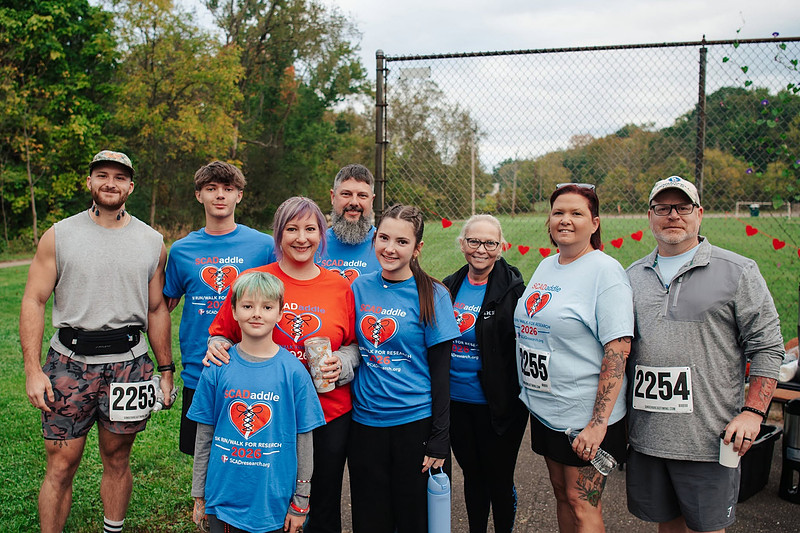
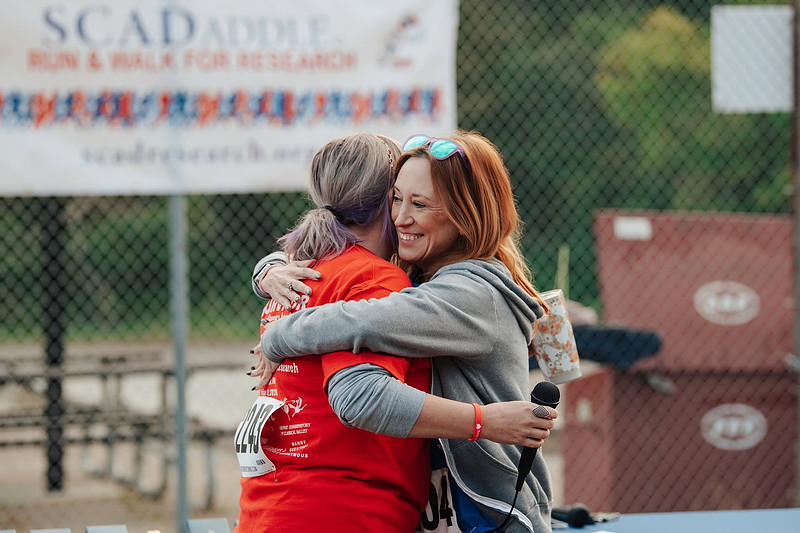
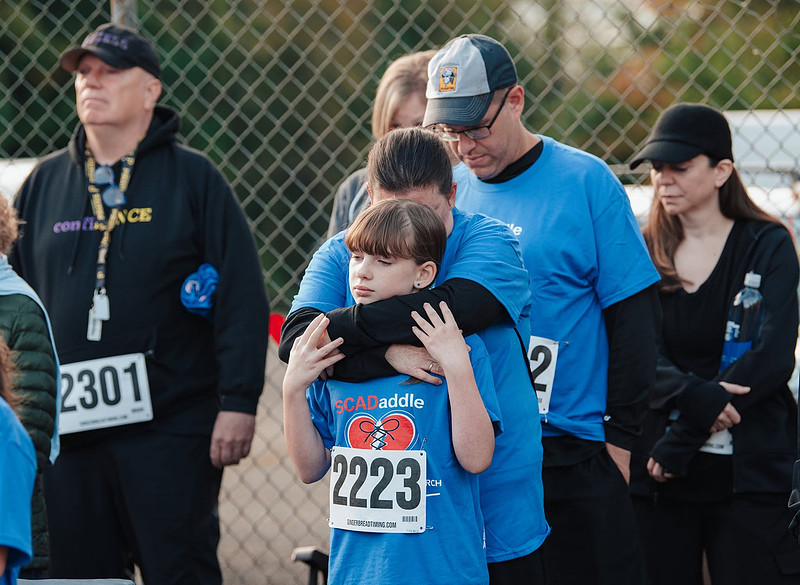
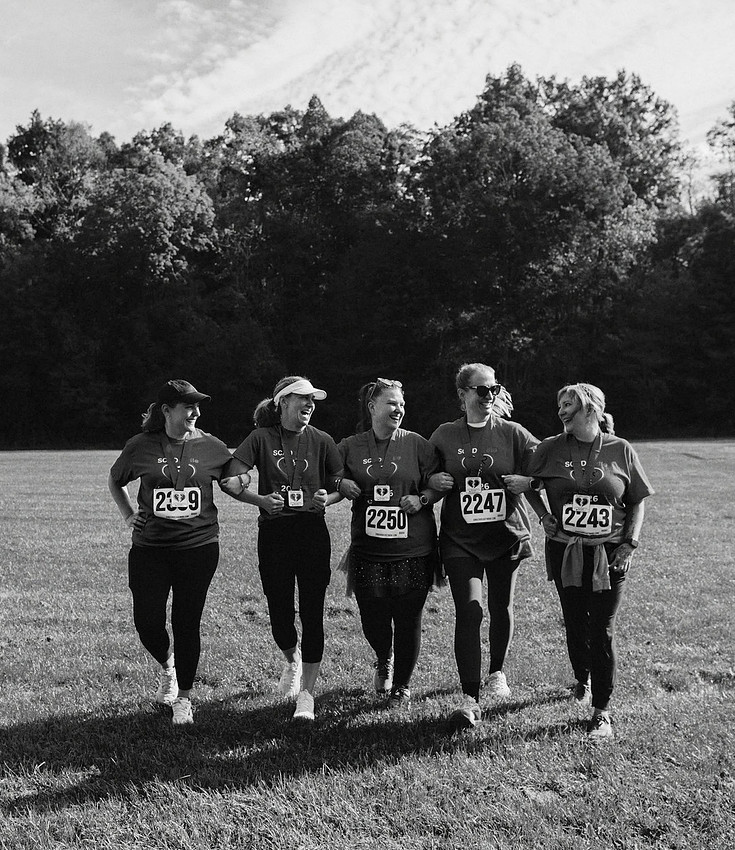
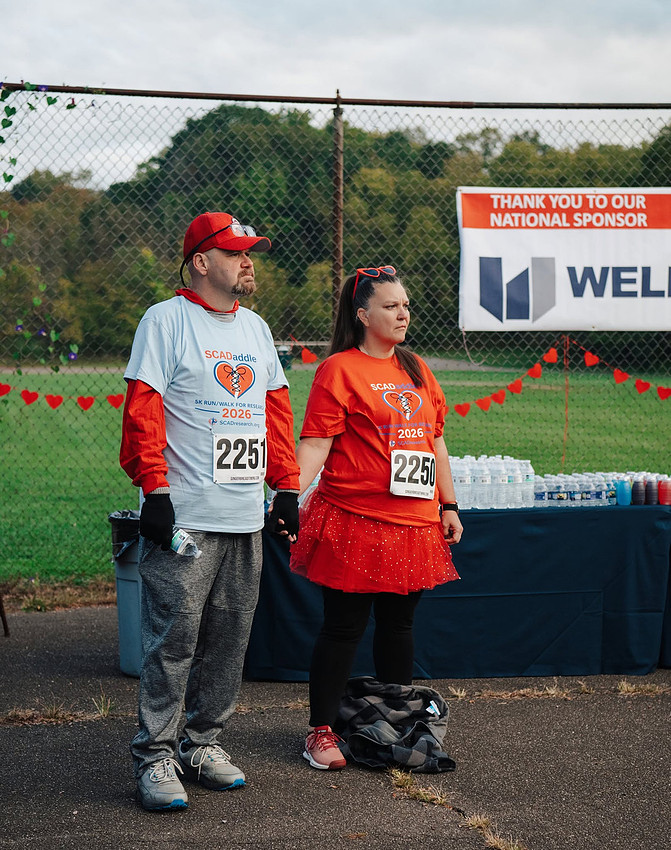
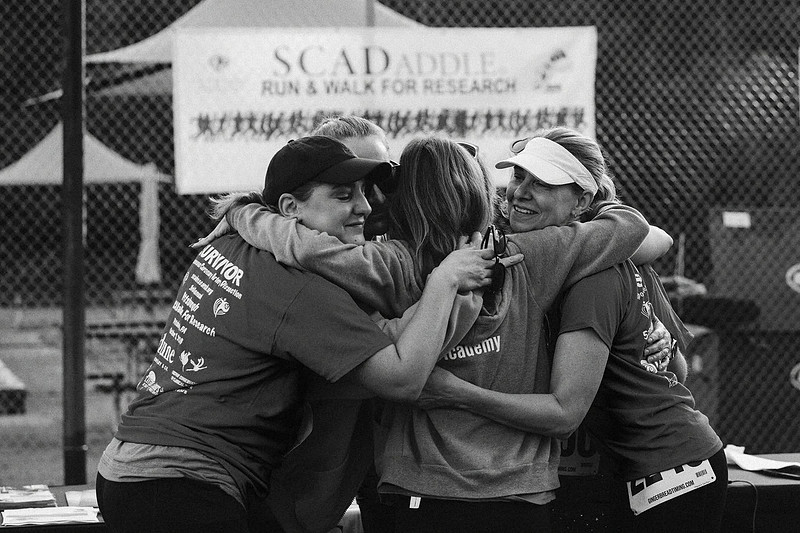
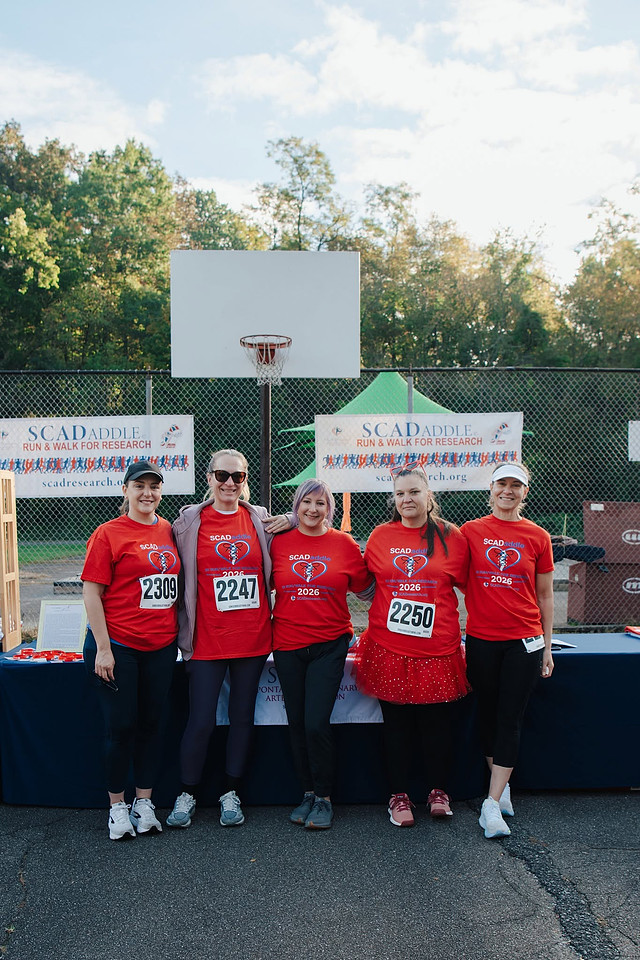
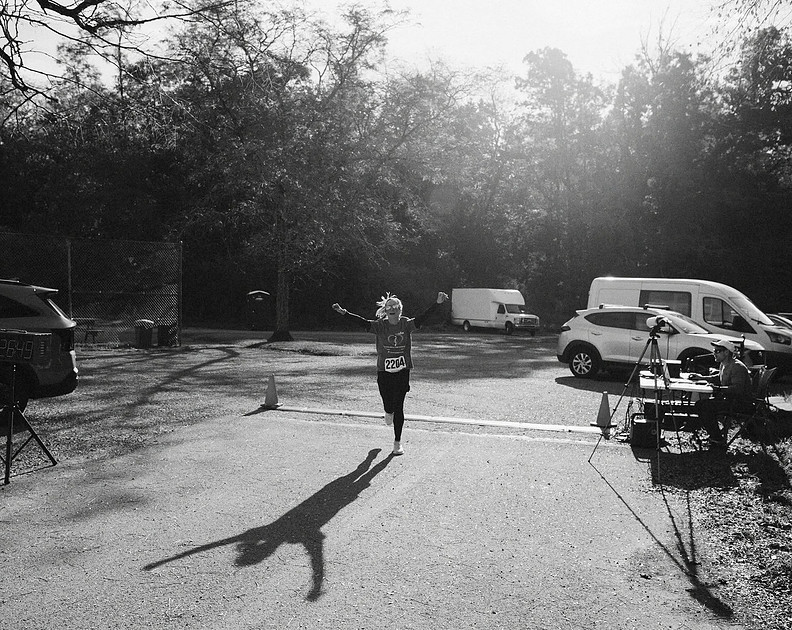
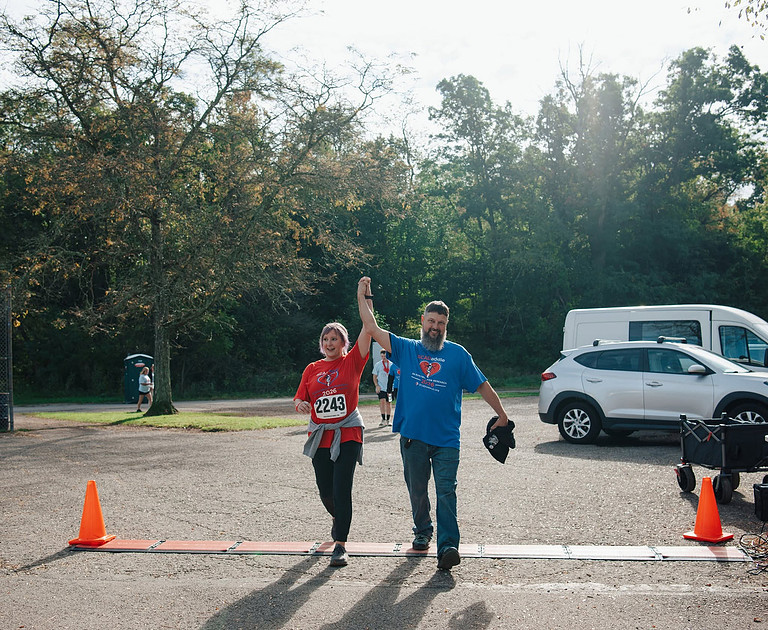
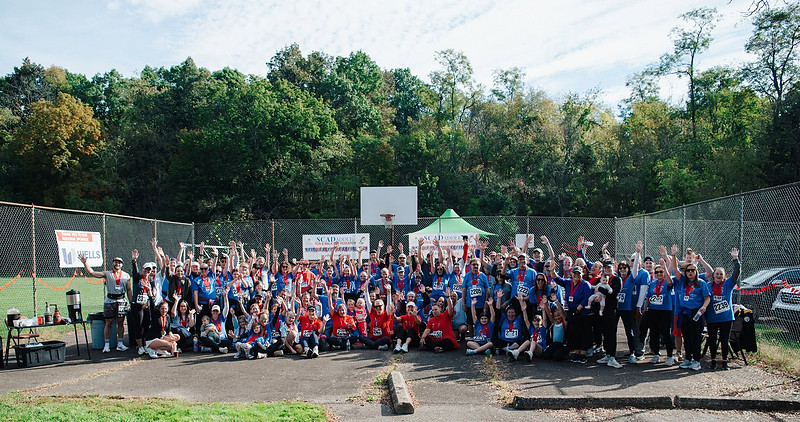
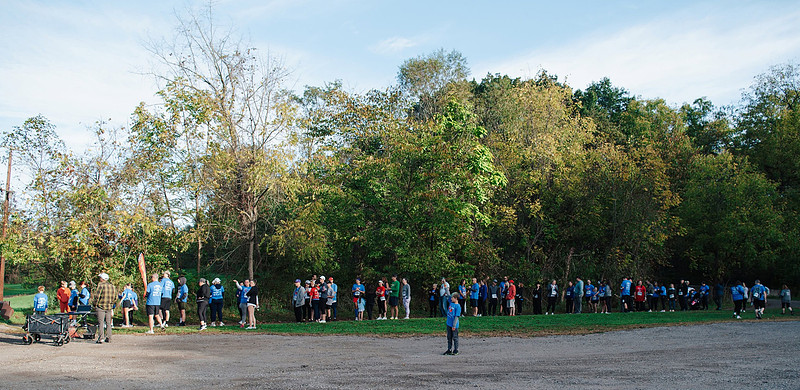
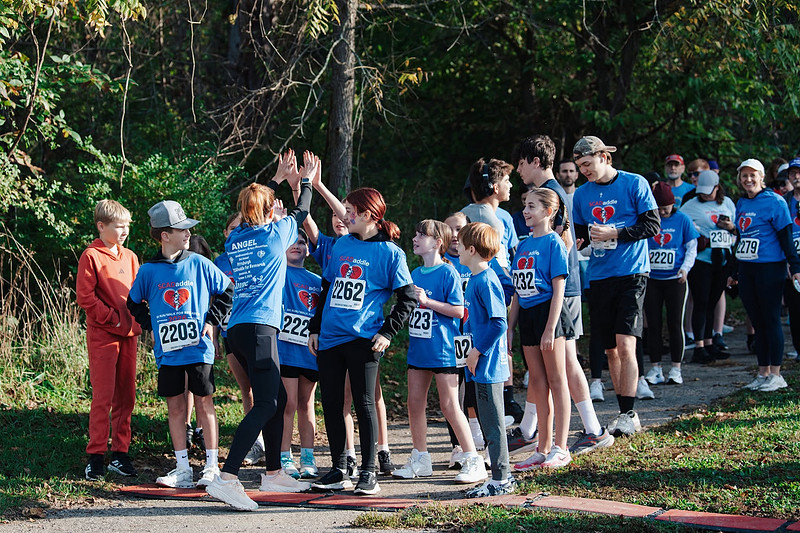
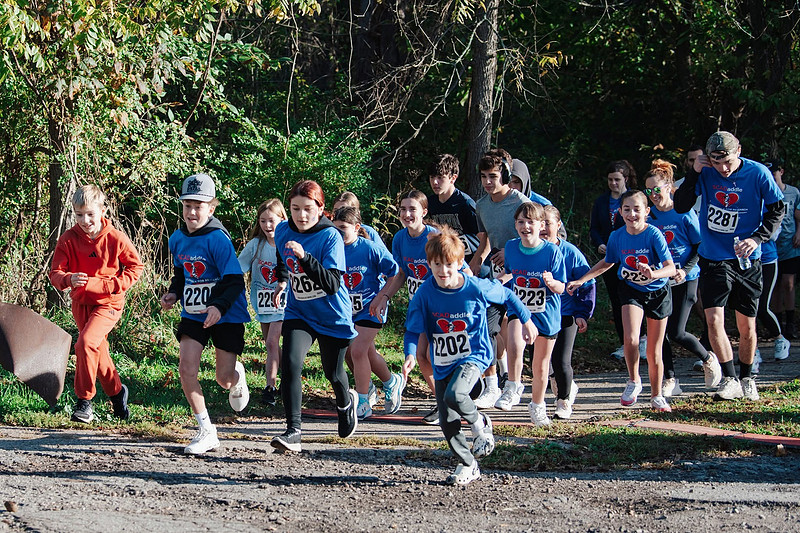
When I photograph an event, I am naturally watching constantly. Of course I photograph the organized portions of the day. I photograph speakers. I photograph participants. I photograph the start and finish. I photograph groups and the details that identify the event. But I am also watching what happens around those things. A hug between two people who understand exactly why the other person is there. Someone becoming emotional while listening to a speaker. A survivor laughing with family members. People carrying signs or wearing something in memory of someone they lost. A conversation happening away from the main crowd. Those photographs are important because the SCADaddle is not simply a collection of people completing a 5K. Everyone arrived with a reason. Sometimes that reason is written on a shirt. Sometimes someone explains it publicly. And sometimes you can only see it in the way two people embrace.
Event Photography Can Help Tell the Story Behind a Cause
Photographing a nonprofit event or awareness event requires a slightly different kind of attention. The obvious photographs still matter. An organization needs images that show participation, branding, volunteers, speakers, sponsors, activities, and attendance. Those images help explain what happened. But when the event exists because people's lives have been changed by something as serious as SCAD, there is another responsibility. The photographs should also leave room for the people. The event may be the reason everyone gathered. Their stories are the reason the event matters. That distinction has become increasingly important to me during my three years photographing Pittsburgh's SCADaddle.
Three Years of Photographing the Pittsburgh SCADaddle
Every year has taught me something different. There are familiar faces when I return. There are new survivors. There are new stories. There are families continuing to remember someone. And there are people learning about SCAD for the first time. My role in all of this is relatively small. I am there with a camera. But photography can preserve some of what happened in that space and help the organization continue telling these stories after everyone has gone home. That is a responsibility I genuinely value.
Thank You to SCAD Research
I want to extend a special thank you to SCAD Research for reaching out and inviting me back to photograph Pittsburgh's SCADaddle for another year. Being trusted with an event once means a great deal. Being invited back year after year gives me the opportunity to understand the community surrounding it in a way I could not have after photographing only one afternoon. I have now had three years to meet survivors, families, organizers, volunteers, and supporters. I have listened to people talk about some of the hardest experiences of their lives. And I have watched many of those same people turn those experiences into advocacy, fundraising, community, and research support. I am grateful that M4J Photography has been able to contribute a small part to documenting that work.
To Michele
I know I can only see a small portion of what it requires emotionally to stand in front of people and revisit your sister's story. But after hearing you speak over several years, I also see the effect that telling that story has on the people listening. Heather is not reduced to the circumstances of how she died. People get to learn that she was a mother, a wife, a sister, a friend, a business owner, and someone whose absence is still deeply felt. Your work keeps her part of the conversation while helping other people learn why SCAD research matters.
To Mandy
Surviving three heart attacks would already be an extraordinary amount for one person to process. Doing so while carrying the loss your family has already experienced and thinking about what SCAD could potentially mean for your daughters and nieces adds another dimension entirely. Being willing to speak about those fears and unanswered questions gives people who have never experienced SCAD an opportunity to understand why research remains so important to survivors and their families.
And to the SCAD Community
There are many stories at the SCADaddle that I will never know completely. I may photograph someone without knowing whether they are a survivor. I may photograph a family without knowing who they are remembering. I may photograph an embrace without knowing the conversation that happened immediately before it. That is okay. Not every story belongs to the photographer. What I can do is approach the people in front of me with the understanding that there may be considerably more behind a photograph than I know. After three years, that may be one of the most important things this event has taught me.
Pittsburgh Event Photography for Nonprofits and Community Organizations
M4J Photography provides event photography throughout Pittsburgh and the surrounding communities, including nonprofit events, fundraising events, races, community programs, corporate events, and awareness campaigns. For organizations, useful event photography should document the scheduled activities while also showing the people participating, supporting one another, and giving the event its purpose. The Pittsburgh SCADaddle continues to remind me why both parts matter. Behind the race numbers, speeches, signs, and finish line are people whose lives have been changed by SCAD. Some are celebrating survival. Some are searching for answers. Some are supporting someone they love. And some are making sure the person they lost continues to be remembered. I am grateful each year that I am invited to photograph them.
Keywords:
charity event photography Pittsburgh,
community event photographer Pittsburgh,
M4J Photography events,
nonprofit event photography Pittsburgh,
Pittsburgh 5K photographer,
Pittsburgh nonprofit event photographer,
Pittsburgh SCADaddle,
SCAD event Pittsburgh,
SCAD Research event,
SCADaddle for Research Pittsburgh
Comments
No comments posted.
Loading...
|