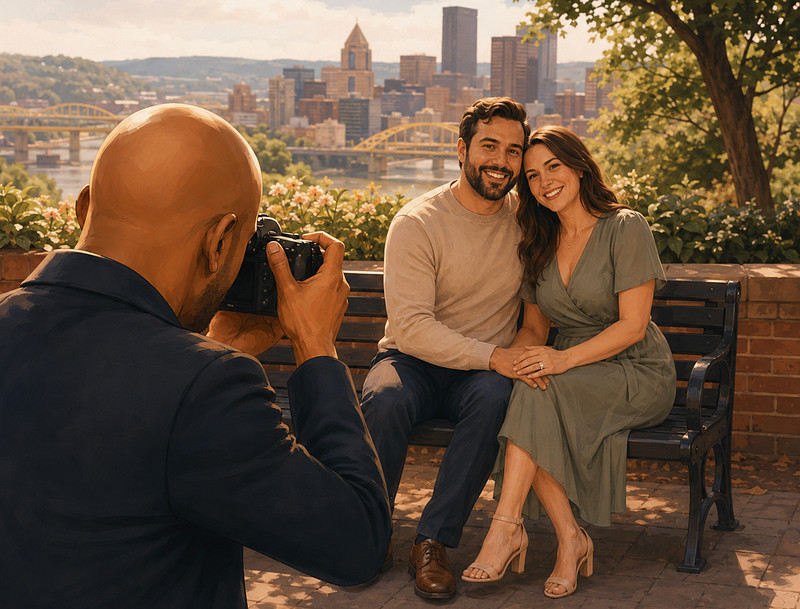
Best Engagement Photos for Couples: What Actually Makes Them Work
That matters because engagement photos usually have several uses. They may show up on save-the-dates, wedding websites, framed prints, social media, guest books, or thank-you cards. A strong session gives you images that feel personal, but also practical enough to use in the places you actually need them.
What makes the best engagement photos for couples?The strongest engagement sessions have a clear sense of purpose. Some couples want images that feel classic and polished. Others want something more casual, playful, or tied to a favorite neighborhood, park, or routine. Neither approach is better. The best choice is the one that fits your relationship and how you actually want to remember this time. A great photo usually has three things working together at once. First, the couple looks comfortable. Second, the setting supports the mood instead of distracting from it. Third, the photographer knows when to guide and when to step back. That balance is what keeps photos from feeling stiff or overly staged. There is also a practical side to this. The best engagement images are useful. You want a mix of close-up portraits, wider environmental shots, and images with enough negative space for design if you plan to use them for printed wedding materials. A beautiful gallery matters, but a gallery that works well in real life matters too.
Start with the setting, not the poseMany couples think the session begins with deciding how to stand. In reality, location does a lot of the work. It affects the tone, the wardrobe, the lighting, and how naturally you interact. If you want timeless photos, cleaner backgrounds tend to age better. Parks, city streets with good architecture, bridges, and open spaces with soft evening light usually give you flexibility without making the photos feel busy. If your style is more personal, think about places with some connection to your story. Maybe it is where you got engaged, where you spend weekends, or a part of Pittsburgh that already feels familiar. The trade-off is simple. Meaningful locations can add depth, but they are not always the easiest places to photograph. A crowded restaurant, a dark interior, or a busy downtown area at the wrong time can make it harder to create calm, flattering images. Sometimes the best answer is a place that feels connected to you without being the exact place tied to a memory.
The best engagement photo ideas often feel simpleCouples sometimes assume the gallery needs a long list of creative concepts. Usually, it does not. A strong session built around good light, comfortable movement, and genuine interaction will usually feel better than a session trying too hard to be different. Some of the most reliable image types include walking together, standing close and talking, one person pulling the other in, sitting side by side, and a few direct portraits where both of you look at the camera. That mix gives you variety without making the session feel like a performance. Closer images tend to feel intimate. Wider shots show place and atmosphere. A candid laugh is useful, but so is one well-composed portrait where you both look calm and connected. The best engagement photos for couples usually include both.
A few image types worth planning forYou do not need to over-script the session, but it helps to know what kinds of photos you may actually want later. Most couples benefit from a set that includes close-up portraits, full-length images, horizontal shots for announcements or websites, and a few less formal frames that show movement. Detail photos can also matter more than people expect. Hands with the ring, a close crop of the two of you leaning in, or a small moment like fixing a jacket or brushing hair from a face can add variety and make the gallery feel complete. This is where planning helps. The goal is not to create a rigid shot list. The goal is to make sure the final gallery has enough range to be useful after the session is over.
Outfit choices can help or hurt the sessionWardrobe does not need to be complicated, but it should be intentional. The goal is to look like yourselves on a good day, not like you borrowed someone else’s idea of what engagement photos should look like. Solid colors usually photograph better than loud prints. Neutrals, richer earth tones, soft blues, and muted colors tend to keep attention on your faces. Coordinating works better than matching. If one person is dressed very formally and the other is in something casual, the imbalance will show. If both outfits fit the same level of formality, the photos feel more cohesive. It often helps to bring two looks if the session allows for it. One can be a little more polished and one more relaxed. That gives you range without turning the session into a wardrobe production. Comfort matters here. If you are adjusting straps, tugging at fabric, or breaking in new shoes, it will show in the images.
Timing changes everythingLight has a major impact on how engagement photos feel. Late afternoon and early evening are often the most flattering because the light is softer and more dimensional. Midday can still work, but it usually requires more careful location choices to avoid harsh shadows and bright squinting. Season matters too. Spring can be beautiful, though weather is unpredictable. Summer offers greenery and longer evenings, but heat and humidity can affect comfort. Fall is popular for good reason, with color and softer temperatures, though popular locations also get busier. Winter can be understated and clean, especially for couples who want quieter backdrops and more neutral tones. The best season depends on the look and experience you want. If you like clean city architecture and a dressier style, winter or early spring may fit. If you want warmth, color, and movement, late summer or fall may feel better. There is no universally best month, only the best match for your style, comfort, and schedule.
Natural does not mean unplannedOne of the biggest misconceptions about engagement sessions is that natural photos simply happen on their own. Realistically, natural-looking images often come from thoughtful direction. A photographer may guide where you stand, how you turn toward the light, when to walk, or what small movement will make a pose feel less stiff. That does not make the photos fake. It makes them flattering and intentional. This is especially helpful for couples who say they are awkward in front of the camera. Most people are not professional models, and they do not need to be. What helps is clear guidance, a pace that does not feel rushed, and prompts that create interaction instead of forcing constant eye contact with the lens. At M4J Photography, that balance matters. Couples usually want images that feel genuine, but they also want to look confident, comfortable, and like themselves. Those goals work together when the session has structure without feeling rigid.
How to make your engagement photos feel more personalPersonal does not have to mean heavily styled or overly sentimental. Often, it shows up in smaller choices. A location you already like. Clothes that feel true to your everyday style. An activity that gives your hands something to do. A pace that leaves room to talk, laugh, and settle in. You can also think about how the photos will be used. If you know you want framed artwork at home, you may lean toward cleaner, more timeless compositions. If you mainly want save-the-dates and online sharing, you may want more variety and a few playful images. If your wedding style is formal, your engagement session does not have to match it exactly, but it should still feel like it belongs to the same couple. This is where planning pays off. The session works best when it reflects both your relationship and the practical uses for the images afterward.
Common mistakes couples makeThe most common issue is trying to fit too much into one session. Too many locations, too many outfits, or too many shot ideas can make the whole experience feel rushed. Variety is good, but a calm, focused session usually leads to stronger results. Another mistake is choosing a location only because it looks popular online. A beautiful spot that feels disconnected from your personality may photograph well, but the final images can still feel generic. The opposite can happen too. Couples sometimes choose a meaningful place that is visually difficult and then wonder why the gallery feels less polished. The right answer is usually somewhere in the middle. It is also easy to underestimate how much comfort affects the final images. If you are cold, stressed, late, or worried about every pose, the photos will reflect it. Building in enough time, wearing clothes you can move in, and trusting the process can make a bigger difference than most couples expect.
The photos you will value most laterLater on, you probably will not care whether every pose followed a trend. You will care whether the photos still feel specific to the two of you. That is why the best engagement sessions are built around comfort, usefulness, and a clear sense of what the images are meant to do. The best engagement photos for couples are usually the ones that still feel specific after the session is over. The location makes sense. The clothes feel like the couple. The images have enough variety to be useful. And the final gallery looks like two people who were guided well without being turned into a performance.
Keywords:
best engagement photo ideas,
best engagement photos for couples,
candid engagement photos,
candid proposal photography,
city engagement photos Pittsburgh,
comfortable engagement photography,
comfortable engagement photos,
couples engagement photos,
couples photo session,
couples photo sessions,
couples photographer,
couples photography Pittsburgh,
couples portraits Pittsburgh,
documentary proposal photography,
engagement photo ideas,
engagement photo locations,
engagement photo outfits,
engagement photo session,
engagement photo sessions,
engagement photo timing,
engagement photo tips,
engagement photographer,
engagement photographer Pittsburgh,
engagement photography,
engagement photos,
engagement photos at golden hour,
engagement photos for couples,
engagement photos for save the dates,
engagement photos for wedding website,
engagement photos that feel natural,
engagement portraits Pittsburgh,
engagement proposal photographer Pittsburgh,
engagement session tips,
how to feel comfortable during engagement photos,
how to plan engagement photos,
M4J Photography engagement photos,
natural couples photography,
natural engagement photos,
Pittsburgh,
Pittsburgh couples photographer,
Pittsburgh engagement photo locations,
Pittsburgh engagement photographer,
Pittsburgh engagement photography,
Pittsburgh park engagement photos,
Pittsburgh photographer for proposals,
Pittsburgh proposal photographer,
Pittsburgh proposal photography,
pre-wedding photo session,
proposal location planning,
proposal photo delivery,
proposal photo ideas,
proposal photo session,
proposal photographer near me,
proposal photographer Pittsburgh,
proposal photographer services,
proposal photography,
proposal photography ideas,
proposal photography packages,
proposal photography pricing,
proposal photography tips,
proposal photos Pittsburgh,
proposal planning photographer,
surprise proposal photographer,
surprise proposal photographer Pittsburgh,
surprise proposal photography Pittsburgh,
what to wear for engagement photos
Comments
No comments posted.
Loading...
|