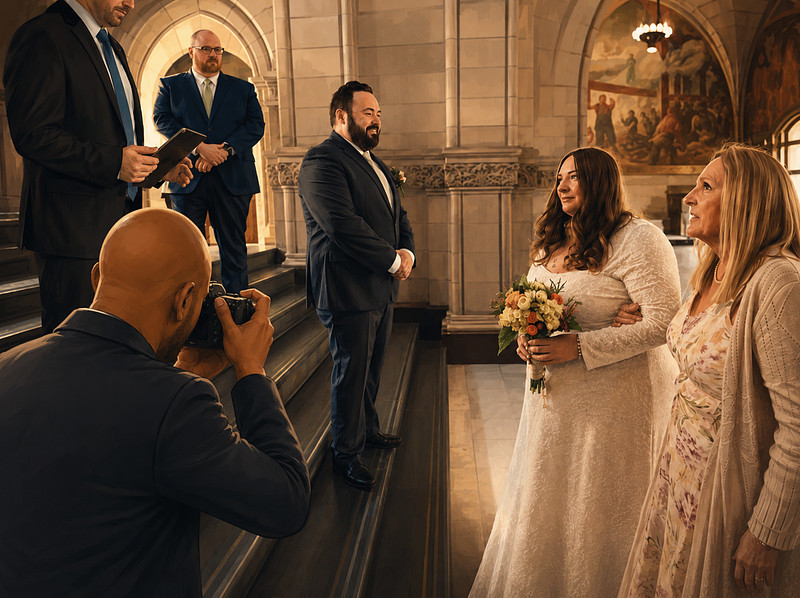
Small Wedding Photography for Intimate Weddings in Pittsburgh
A smaller guest list changes more than the seating chart. With small weddings and intimate weddings, photography becomes less about covering a crowd and more about paying attention to the people, timing, details, and exchanges that define the day. A 20-person wedding does not need the same photo approach as a 200-person ballroom celebration. The pace is different. The priorities are different. The pressure points are different. For many couples, a smaller wedding is not a scaled-down version of a larger event. It is the version that makes the most sense for how they want to celebrate.
Why small weddings photograph differentlySmall weddings tend to give people more room to be present. Couples are not always getting pulled through a long timeline, a large wedding party, or a packed reception schedule. That can create better opportunities for photos that show how the day actually moved. The guest list also changes the way the day feels. When only a small group of people is invited, every person in the room usually has a reason for being there. That makes the interactions more important. A look between parents, a quick exchange before the ceremony, a toast at dinner, or a quiet reaction from a close friend can carry more weight than a large-room overview. Intimate weddings also make the setting more noticeable. A backyard, courthouse, private dining room, small venue, family home, or Pittsburgh location with personal value becomes part of the visual story. The space does not need to be large to photograph well, but it does need to be handled with attention to light, timing, angles, and how people naturally move through it.
What matters most in small wedding photographyThe strongest small wedding photography usually comes from knowing what the day is actually about. You do not need a large guest count or a full-day schedule to create a strong gallery. You need a photographer who understands what to prioritize. For some couples, that means family relationships. For others, it means clean portraits, ceremony coverage, details, dinner, speeches, or candid images of the people closest to them. Most couples want a mix. The goal is to create photos that are polished enough to print and share, while still showing the day as it actually happened. Comfort matters here. Smaller weddings can feel more personal because there are fewer distractions. That can be a good thing, but it also means people may feel more aware of the camera. A photographer should be able to give direction when needed without making the day feel like it has been taken over by photos. Small weddings need a smarter timelineOne of the biggest misconceptions about intimate weddings is that less people automatically means less planning. Sometimes that is true. But from a photography standpoint, smaller weddings still need a clear timeline because the important parts can happen quickly. If the ceremony is short, there may only be a few minutes to capture the walk-in, vows, ring exchange, kiss, reactions, and exit. If the wedding is in one room, the light and layout matter even more. If the guest list is small, family portraits may move faster, but the candid moments between guests may be more important because each person present was chosen intentionally. A simple timeline can protect the day without making it feel stiff. That may include getting-ready photos, a first look, ceremony coverage, family portraits, couple portraits, dinner, speeches, and candid reception coverage. The point is not to stretch the day longer than it needs to be. The point is to make sure the parts that matter are not rushed or missed. The trade-offs couples should think aboutSmall weddings often feel calmer, more flexible, and more personal. They can give couples more control over the experience and may allow them to invest more in the setting, food, photography, or time with their guests. But smaller weddings also come with trade-offs. A private room may have difficult lighting. A courthouse ceremony may move quickly. A backyard wedding may depend heavily on weather. A restaurant celebration may have limited portrait space. A short event may leave very little room for delays. None of these are problems by themselves. They just need to be thought through before the day arrives. A photographer who understands small wedding photography should be able to work around tight spaces, shifting light, shorter timelines, and a more personal atmosphere without interrupting the flow of the day. Choosing a photographer for an intimate weddingThe right photographer for an intimate wedding is not always the same photographer you would choose for a large traditional wedding. A smaller wedding needs someone who can be observant, organized, and calm without making the day feel over-managed. You want someone who can move between different parts of the day without becoming distracting. That may mean quietly documenting the ceremony, stepping in for family portraits, giving simple direction during couple photos, and then fading back during dinner or the reception. The photographer’s presence should help the day feel easier, not heavier. It also helps to look for someone who understands smaller weddings as their own category. Small weddings deserve the same level of care as larger weddings, but the approach should fit the size and feel of the event. The guest count may be lower, but the photos still need to be handled with care, consistency, and attention to what the couple actually values. Why smaller weddings fit a different kind of photographyLarge weddings often require a photographer to keep up with a full schedule, multiple groups, reception formalities, and a long list of expected images. Smaller weddings are different. They usually need a photographer who can pay attention to fewer people more closely. That difference matters. At an intimate wedding, there may not be a large wedding party, a packed dance floor, or hours of reception coverage. Instead, the strongest images may come from the ceremony, the couple portraits, the family groupings, the table setting, the dinner conversation, or the way the couple interacts when there is finally a quiet minute. This is where small wedding photography can be especially strong. The photos do not have to make the event look bigger than it was. They should make the event look clear, personal, and well-documented for what it actually was. Small wedding photography in PittsburghPittsburgh has several settings that can work well for smaller weddings and intimate ceremonies. Courthouses, restaurants, private rooms, historic buildings, parks, overlooks, hotels, and small venues can all create a different feel depending on the couple’s plans. The location does not need to be dramatic to work. What matters is how the space supports the day. A simple ceremony space with good light can photograph better than a larger venue with poor lighting and too many distractions. A quiet dinner with close family can create a stronger gallery than a rushed event built around a timeline that does not fit the couple. For couples planning a smaller wedding or intimate ceremony in Pittsburgh, M4J Photography focuses on coverage that feels personal, organized, and calm without turning the day into a production. The photos that matter mostThe strongest photos from a smaller wedding are often the ones that show what the day actually felt like: the people who were there, the pace of the celebration, the setting, and the moments that would have been easy to miss. That might be a parent helping with a jacket. A couple walking into the ceremony together. A small group gathered around a dinner table. A quiet laugh during portraits. A hand being held during the vows. A detail the couple chose because it meant something to them. Small wedding photography should not try to make the day look like something else. It should give the couple a clear record of the wedding they actually planned, with enough care and structure to make the images useful long after the day is over.
Keywords:
Allegheny County courthouse wedding photographer,
Allegheny County courthouse wedding photography,
backyard wedding photographer Pittsburgh,
city hall wedding photographer Pittsburgh,
city hall wedding photography Pittsburgh,
courthouse wedding photographer Pittsburgh,
documentary intimate wedding photography,
documentary small wedding photography,
elopement photographer near me,
elopement photographer Pittsburgh,
elopement photography Pittsburgh,
intimate wedding candid photography,
intimate wedding ceremony photography,
intimate wedding coverage Pittsburgh,
intimate wedding photographer,
intimate wedding photographer near me,
intimate wedding photographer Pittsburgh,
intimate wedding photography,
intimate wedding photography packages,
intimate wedding photography Pittsburgh,
intimate wedding photography pricing,
intimate wedding photojournalism,
intimate wedding photos Pittsburgh,
intimate wedding portraits,
intimate wedding reception photographer,
intimate weddings Pittsburgh,
M4J Photography intimate weddings,
M4J Photography small weddings,
micro wedding photographer,
micro wedding photographer near me,
micro wedding photographer Pittsburgh,
micro wedding photography,
micro wedding photography Pittsburgh,
photographer for private wedding ceremony,
photographer for small wedding ceremony,
photography for intimate weddings,
photography for small weddings,
Pittsburgh courthouse wedding photography,
Pittsburgh elopement photographer,
Pittsburgh elopement photography,
Pittsburgh intimate wedding photographer,
Pittsburgh intimate wedding photography,
Pittsburgh micro wedding photographer,
Pittsburgh micro wedding photography,
Pittsburgh private wedding photographer,
Pittsburgh restaurant wedding photography,
Pittsburgh small wedding photographer,
Pittsburgh small wedding photography,
Pittsburgh wedding photographer for small weddings,
private dining wedding photography,
private wedding photographer Pittsburgh,
restaurant wedding photographer Pittsburgh,
short wedding ceremony photography,
small ceremony photographer Pittsburgh,
small wedding candid photography,
small wedding ceremony photography,
small wedding couple portraits,
small wedding coverage Pittsburgh,
small wedding dinner photography,
small wedding family portraits,
small wedding photo coverage,
small wedding photographer,
small wedding photographer near me,
small wedding photographer Pittsburgh,
small wedding photography,
small wedding photography for intimate weddings,
small wedding photography packages,
small wedding photography Pittsburgh,
small wedding photography pricing,
small wedding photojournalism,
small wedding photos Pittsburgh,
small wedding portraits,
small wedding reception photographer,
small wedding reception photography,
small wedding timeline photography,
small weddings Pittsburgh,
wedding photographer for intimate ceremony,
wedding photographer for small ceremony,
wedding photography for intimate celebration,
wedding photography for small guest list
Comments
No comments posted.
Loading...
|