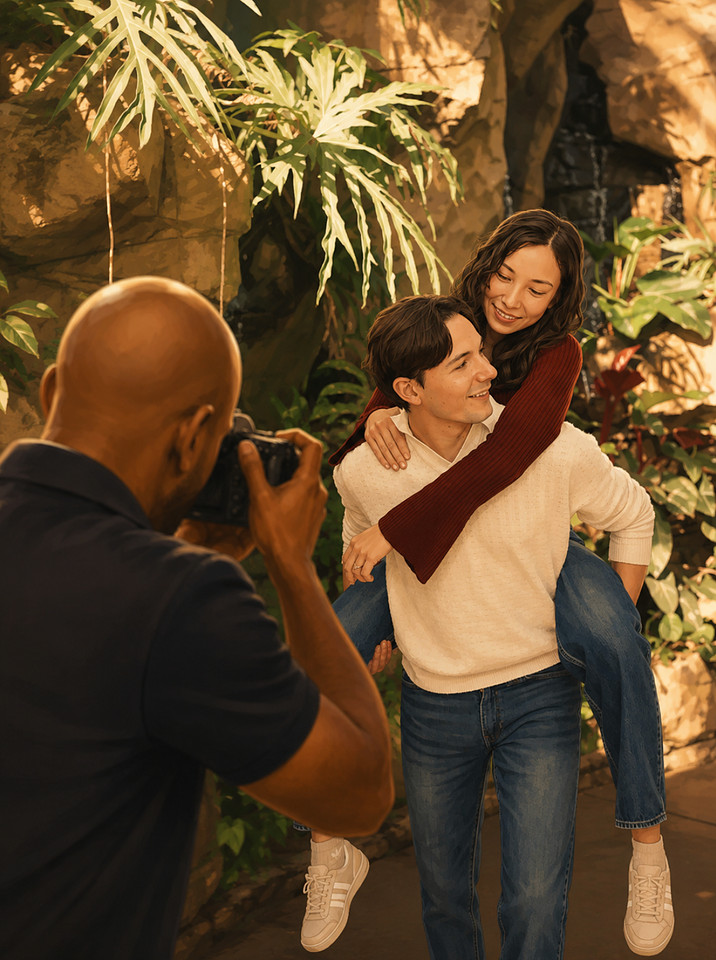

A lifestyle couples session uses movement, conversation, and the location as part of the photography. The couple is still given direction, but the session does not depend on holding one pose after another for the entire hour.
The photographer may begin with a few structured portraits, then introduce walking, sitting together, exploring the location, or another simple activity. These changes give the gallery different expressions, body positions, compositions, and ways of showing the couple together.
This type of session works well for engagements, anniversaries, date nights, and couples who want both polished portraits and photographs that show how they interact.
The First Few Minutes Are Usually an Adjustment
Most couples are aware of the camera when the session begins.
They may wonder where to place their hands, whether they are standing correctly, or what they are expected to do between photographs. That is normal, especially when they are meeting the photographer for the first time.
The answer is not to tell them to ignore the camera. They know it is there.
Instead, the photographer can begin with clear instructions that give the couple an easy starting point. That may include where to stand, which direction to face, how close to move together, or where to look.
As the session continues, the instructions can become less detailed. The couple begins to understand the pace, and the photographer begins to notice how they communicate.
One person may use humor. The other may respond with quick expressions or quiet reactions. They may walk close together, lean toward one another while talking, or become more animated once they are moving.
Those details help shape the rest of the session.
Lifestyle Photography Still Requires Direction
A lifestyle session should not leave a couple standing in front of the camera waiting for something to happen.
The photographer is still responsible for choosing the light, watching the background, arranging the composition, and making sure both people can be seen clearly.
The difference is in how the direction is given.
A couple may be asked to walk toward the camera while continuing a conversation. The photographer controls the starting point, direction, spacing, and composition. The couple controls what they say and how they respond to one another.
They may be asked to sit together, move closer, turn toward each other, or walk through part of the location. Those instructions create a clear setup without controlling every expression that follows.
Good direction gives the couple something specific to do. It should not require them to perform a personality that does not belong to them.
Traditional Portraits Still Belong in the Gallery
Lifestyle photography does not mean removing posed portraits from the session.
Most couples still want photographs where they are positioned carefully and looking toward the camera. Those images may be used for engagement announcements, framed prints, albums, gifts, or wedding websites.
The session can include those photographs without repeating the same arrangement throughout the entire gallery.
A complete couples gallery may include:
- Full-length portraits
- Closer photographs
- Individual portraits
- Both people looking at the camera
- Walking photographs
- Seated photographs
- Wider images that show the location
- Close details of hands, expressions, or clothing
- Photographs taken during conversation or movement
Each type of image serves a different purpose. The structured portraits show the couple clearly. The movement and interaction create changes in posture, expression, and pacing.
Activities Should Match the Couple
An activity can help a couple participate without concentrating on the camera, but it should make sense for them.
One couple may enjoy walking through a conservatory or exploring a neighborhood. Another may be comfortable sitting in the grass, dancing, racing each other, or trying something playful. A quieter couple may prefer coffee, a bookstore, a familiar park, or an evening session at home.
The activity does not need to be elaborate. Its purpose is to give the couple something to respond to.
A forced activity can be as distracting as an uncomfortable pose. Couples should not be asked to run, dance, or act overly energetic when that does not match how they normally interact.
Before the session, it helps to discuss how the couple spends time together, whether they prefer quieter or busier locations, and how comfortable they are with being photographed in public.
That information gives the photographer a better starting point than choosing activities from a standard list.
The Location Should Create Options
A useful location provides several ways to photograph the couple without requiring a long drive between every setup.
Pittsburgh offers conservatories, parks, overlooks, neighborhoods, riverfront areas, historic buildings, and urban streets that can support different types of couples sessions.
A place such as Phipps Conservatory offers architecture, plants, walkways, and areas for more structured portraits. Flagstaff Hill provides open grass and space for movement. Mount Washington adds the skyline and wider views of the city.
Each location produces a different type of photograph.
The first part of a session may use cleaner backgrounds while the couple becomes familiar with the process. An open area may allow for walking or playful movement. An overlook may work well for slower portraits near the end of the session.
A recognizable Pittsburgh location is useful, but it should also support the way the couple wants to be photographed. The location should contribute to the session instead of functioning only as a backdrop.
Keep Photographing Between Planned Setups
Useful photographs often happen after an instruction ends.
A couple may laugh about something that went wrong, continue talking while moving to another area, adjust each other’s clothing, or help one another across uneven ground.
These reactions are easy to miss when the photographer lowers the camera immediately after completing a planned portrait.
Transitions also help connect the different sections of the gallery. Without them, the final collection can look like a series of unrelated poses in several locations.
Photographing the walk between setups, the pause after a movement, or the reaction to an instruction adds continuity. It shows how the session progressed instead of presenting only the finished arrangements.
The Direction Should Change as the Session Progresses
The beginning and end of a couples session should not require the same amount of instruction.
Early photographs may need detailed positioning because the couple is still learning how the photographer works. Later, a short instruction may be enough.
A couple that initially needed guidance with hand placement and posture may eventually respond to something as simple as walking toward an overlook or sitting together on a hillside.
The photographer should recognize when the couple has become comfortable with the process. Continuing to interrupt every movement with corrections can make the later part of the session less effective.
Direction remains available, but it becomes more selective.
Lifestyle Sessions Create More Variety
A gallery can contain many photographs and still feel repetitive.
Changing only the camera angle or background does not necessarily create a meaningful difference between images. The couple may still be standing in the same arrangement with the same expression.
Lifestyle photography introduces changes in movement, distance, posture, activity, and interaction.
A couple may begin with formal portraits, walk through the location, sit together, attempt something playful, and finish with slower photographs overlooking the city. Each part of the session produces a different visual result.
That variety is useful when couples want images for several purposes. A formal portrait may be selected for a frame. A wide photograph may show the Pittsburgh skyline. A close image may focus on an expression or gesture. A walking photograph may work well in an album or announcement.
The gallery should offer clear differences from one image to the next rather than minor variations of the same pose.
Planning a Lifestyle Couples Session in Pittsburgh?
M4J Photography offers couples and engagement sessions throughout Pittsburgh and the surrounding areas.
Sessions can include structured portraits, guided movement, multiple locations, and activities selected around how the couple prefers to spend time together.
Couples photography begins at $450 for a one-hour session.
Message M4J Photography with your preferred date, location ideas, and the type of photographs you would like included.
